


|
|
|
|
by Yvette Depaepe
Published the 14th of September 2026
For Yein, photography is about capturing transient landscapes and elevating them to create an ideal, beautiful aesthetic by capturing the 'passage of time' and the essence of nature. He firmly believes that if we cherish every moment of our lives, they will eventually form beautiful memories.
Join me in discovering the atmosphere and narrative that Yein wishes to convey through his rich body of work.
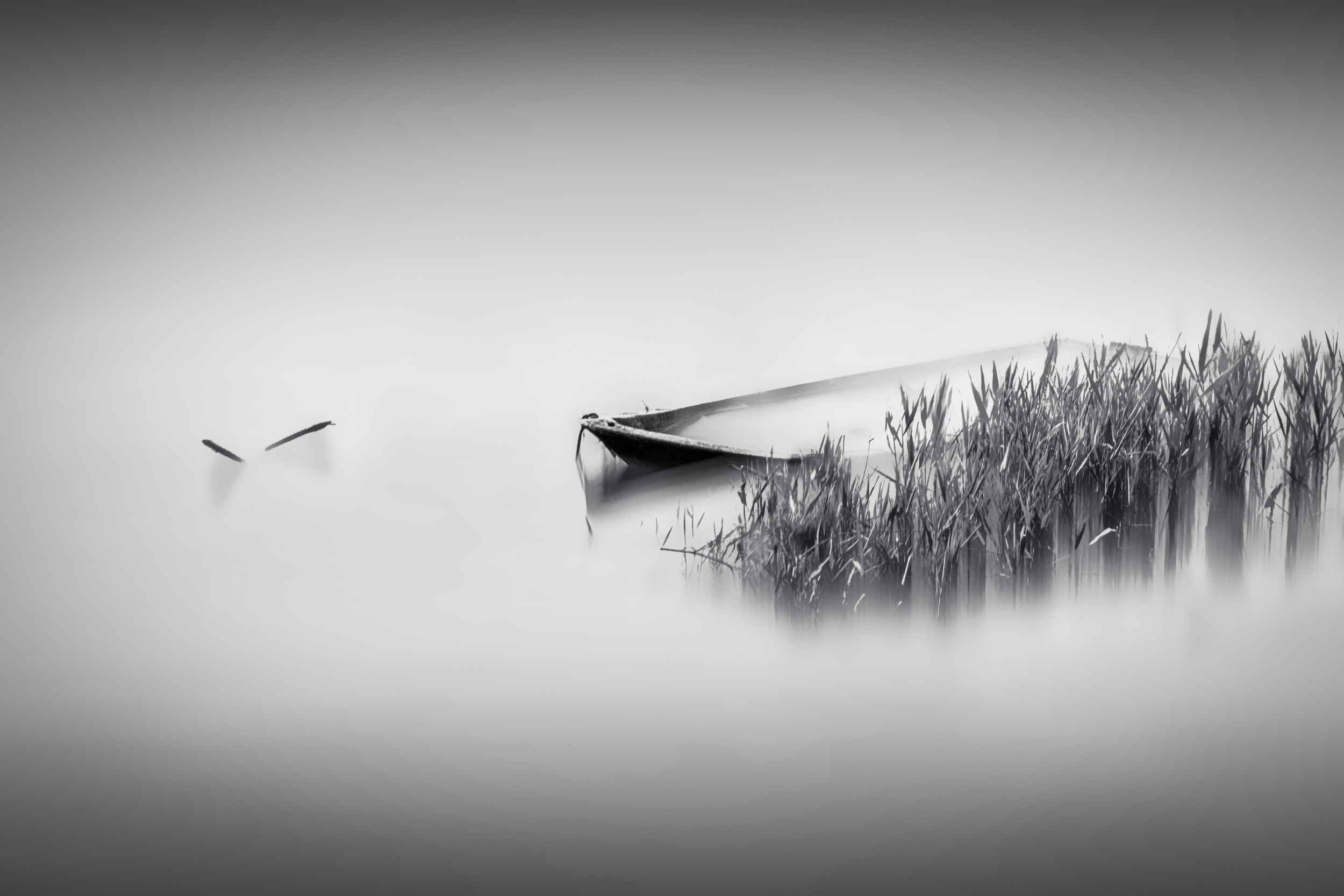
Dear Yein, firstly, I would like to thank you for taking the time to answer this questionnaire.
Could you please start by introducing yourself briefly, telling us about your hobbies, and describing any other projects you are involved in?
My name is Gunmok Lee. I was born in Pyeongtaek, on the shores of the West Sea in South Korea. Watching the ebb and flow of the tides there shaped my artistic identity. Whenever I gaze at the crimson sunset bleeding across the sea, I feel deeply moved, as though the hours of my life are melting into its shimmering light. It was my desire to capture the beauty of the sea and its ever-changing moments forever that led me to pick up a camera. My ongoing project reinterprets the West Sea's dynamic moments, sculpted by its dramatic tidal differences, as the 'passage of time', distilling them into a single minimalist fine art image.
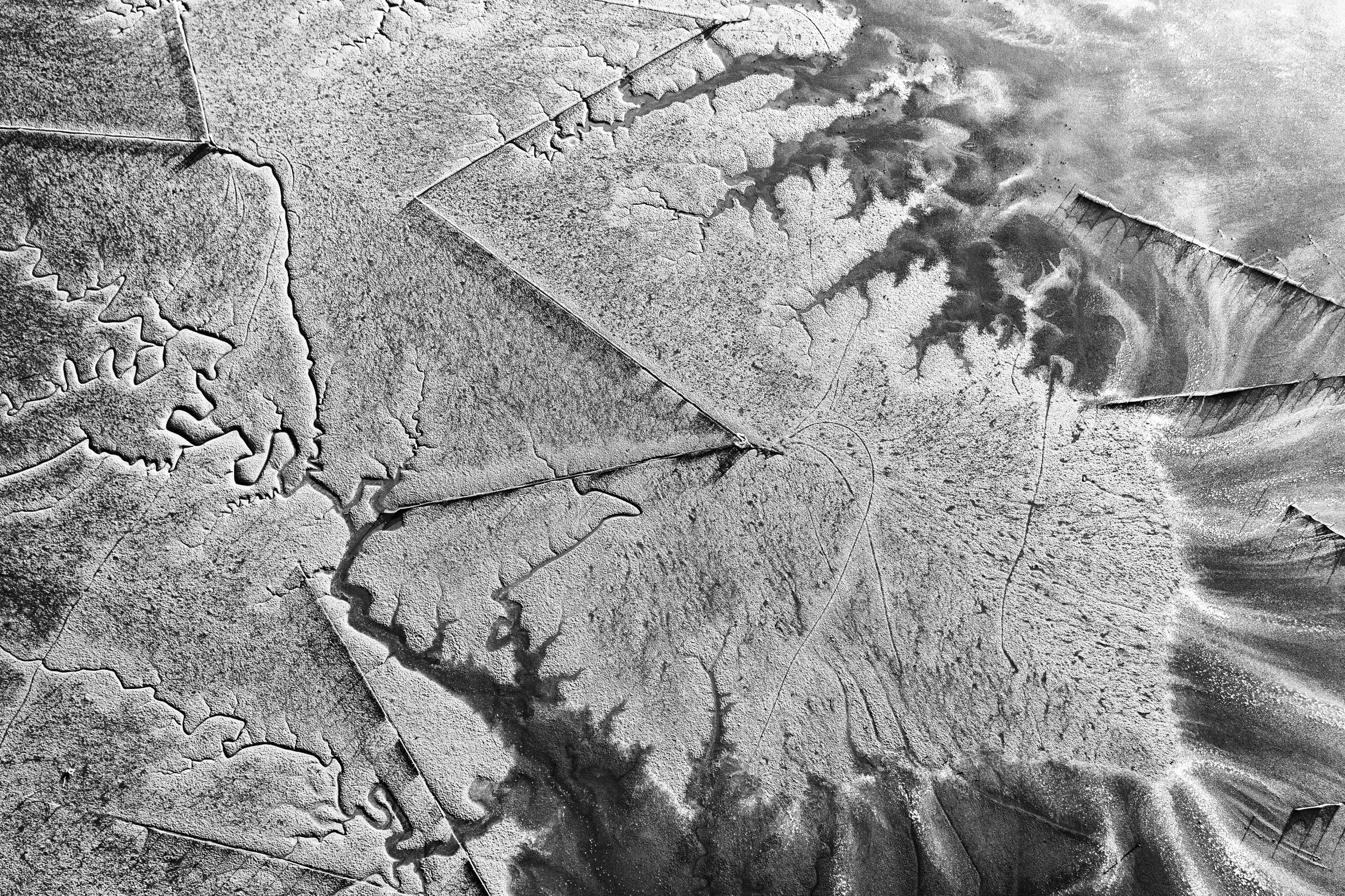
Seen from the sky...
Admire the mysteries of nature created by the waterway
How and when did you start your journey in photography?
It all began when I bought a DSLR camera to capture my children’s precious early years. Despite having no prior knowledge of photography, I taught myself online, mastering the camera's mechanical functions and digital post-processing software such as Photoshop. What started as a hobby of capturing my family's daily life and travels gradually evolved into a passion for exploring and embedding my own aesthetic vision within the frame. In 2015, I became an official member of the Pyeongtaek Chapter of the Photo Artists Association of Korea. Since then, I have been actively engaging with fellow artists and presenting my work at numerous group and solo exhibitions.
A private exhibition: https://blog.naver.com/yein_tree/222667238497
For many of us, photography is a hobby or a way of life. So, how would you describe your relationship with photography?
I have dedicated the past 30 years to the field of interior design following my marriage. My work involves orchestrating every aspect of a space, from its foundational layout to its structural utility, and harmonising the forms and colours of finishing materials to create the perfect space. I then document these spaces in my portfolio. In my view, interior design and photography are complementary disciplines that inspire each other constantly. Just as an interior space is built upon rigorous analysis and design before being realised visually through photography, my photographic work begins with an analysis of the subject's structure, calculation of the tides and location scouting. This ultimately culminates in a flawless portfolio through meticulous post-processing. My interior design brand and my artistic pseudonym as a photographer, ‘yein’ (meaning 'artist' in Korean), encapsulate my life philosophy of crafting spaces and frames into works of art.
Which experience has had the greatest influence on your photographic journey so far?
In the early stages of my career, I immersed myself in conventional landscape photography, capturing sunrises and sunsets. I also worked on video projects that showcased the passage of time using time-lapse techniques. However, the digital era marked a major turning point in my photographic journey. The ultra-long exposure effects that were once only possible with film cameras could now be achieved through digital stacking techniques using software. Captivated by the prospect, I set out to reinterpret the mysterious tidal channels and sunsets of the West Sea — which I had gazed upon since childhood — using this method. Armed with ND filters and exposure stop calculations, I challenged myself endlessly to visualise the flow of time through slow shutter speeds. When I finally witnessed the waterways stained by hours of accumulated light flowing softly through the tidal channels at dusk, I was completely spellbound by the wondrous art of long-exposure photography.
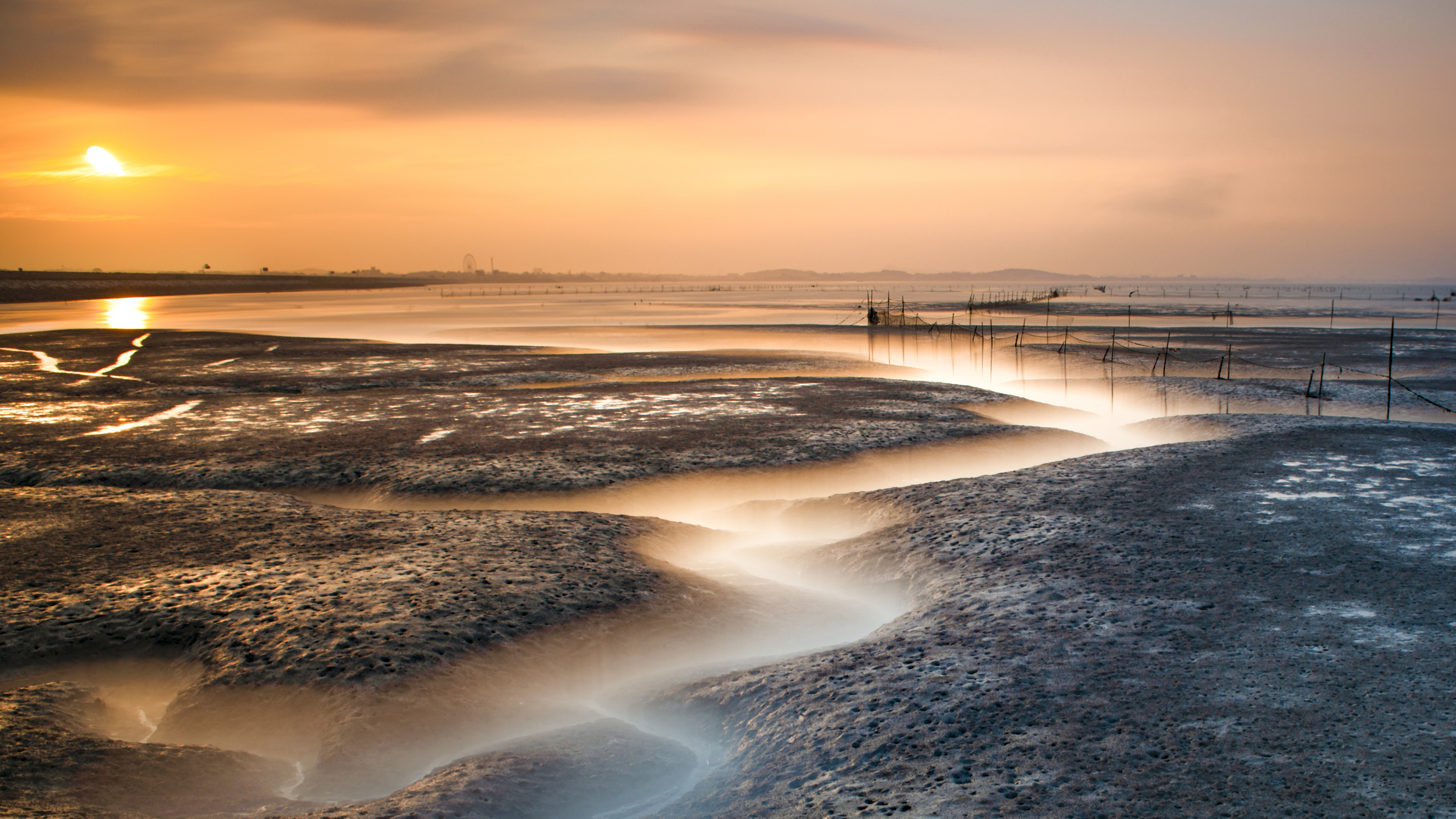
Dyed in the sunset
What kind of appearance will the waterway fill up in the afternoon light...
I erase the time and wait in anticipation of the beautiful scenery.
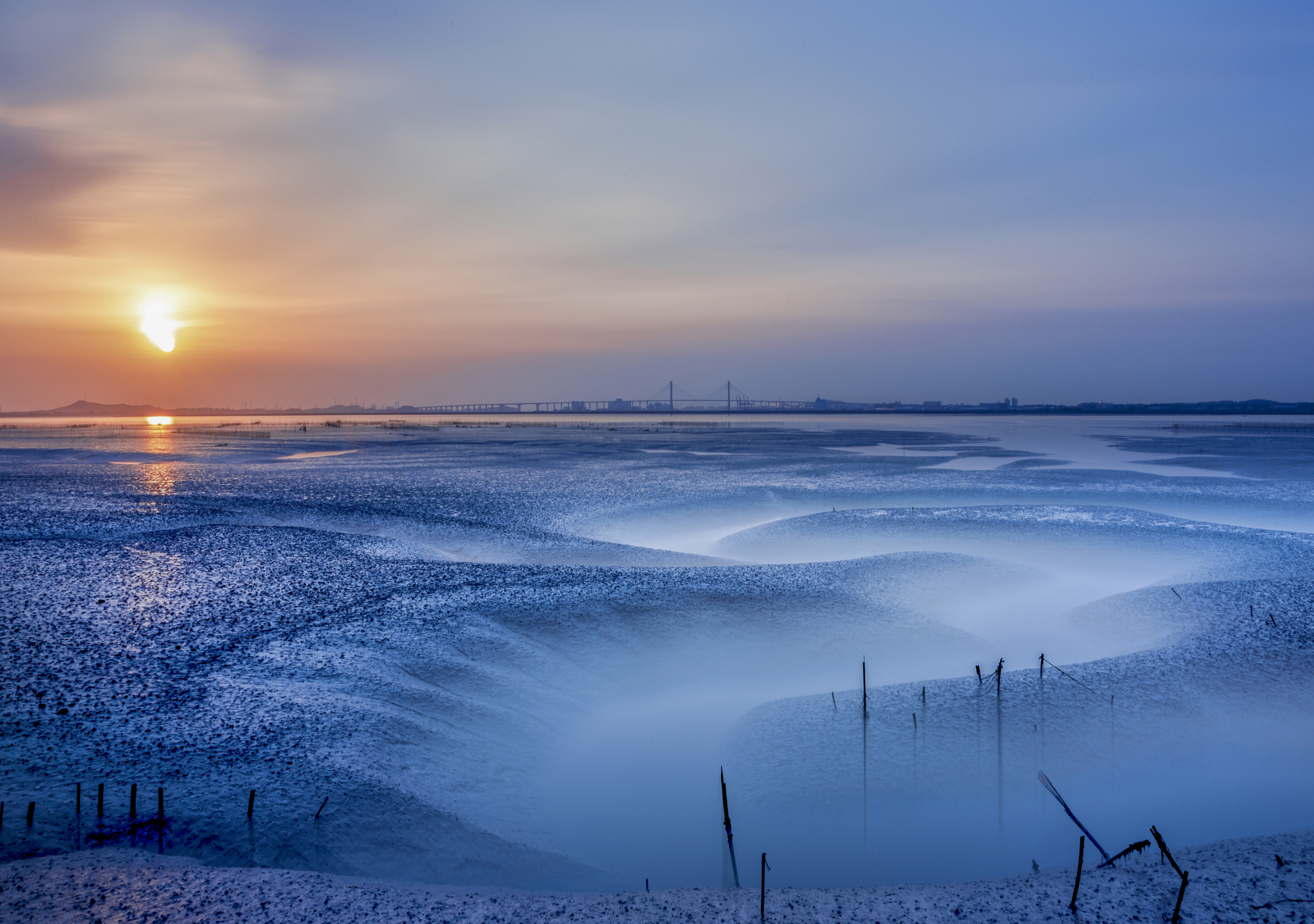
Day...
The moment the day is erased Empty
your mind and look at the setting sun
and the outflowing water Let go of the hard life for a while.
You have a wonderful black and white body of work. I see wonderful landscapes and sublime long exposure images. What draws you to these genres?
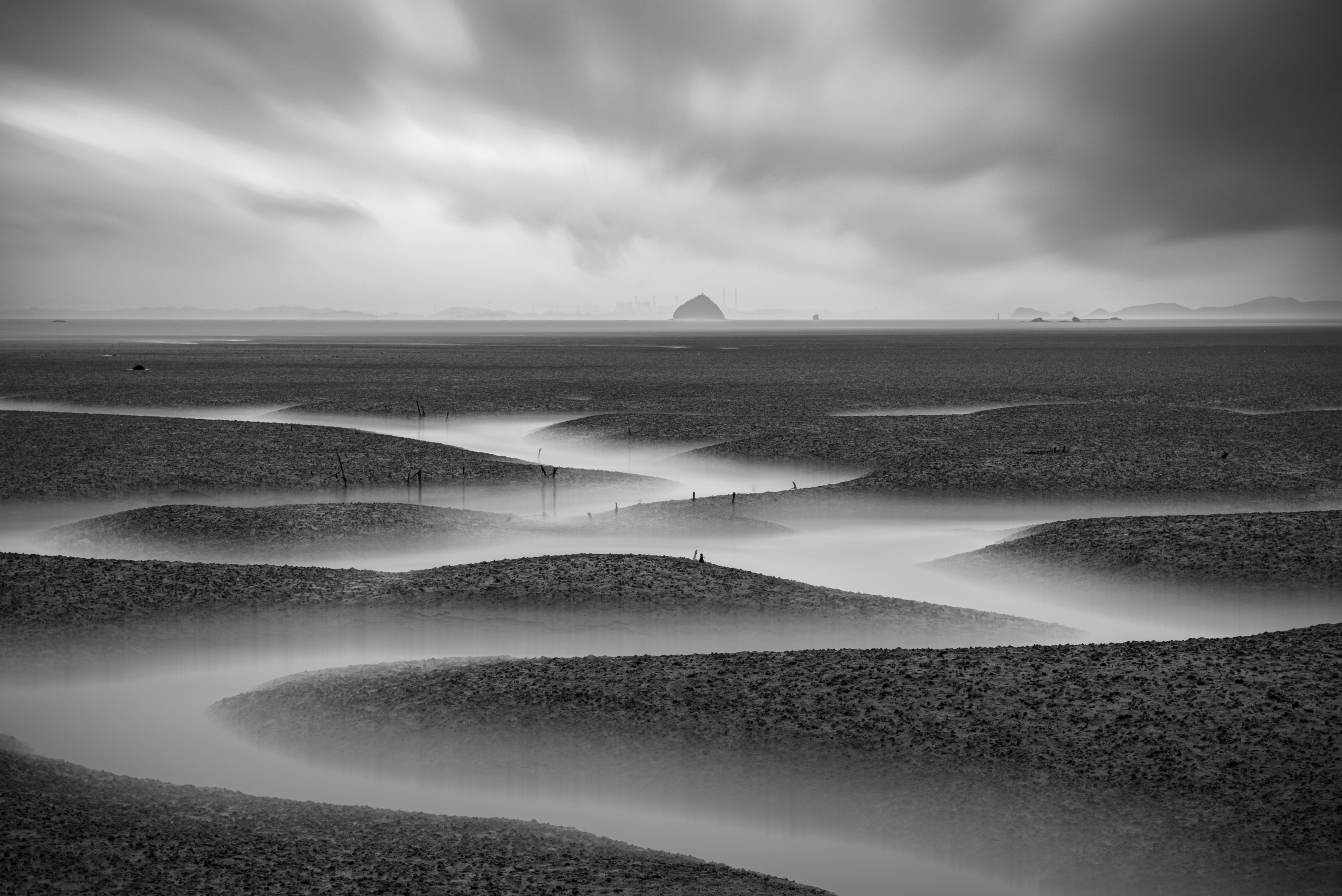
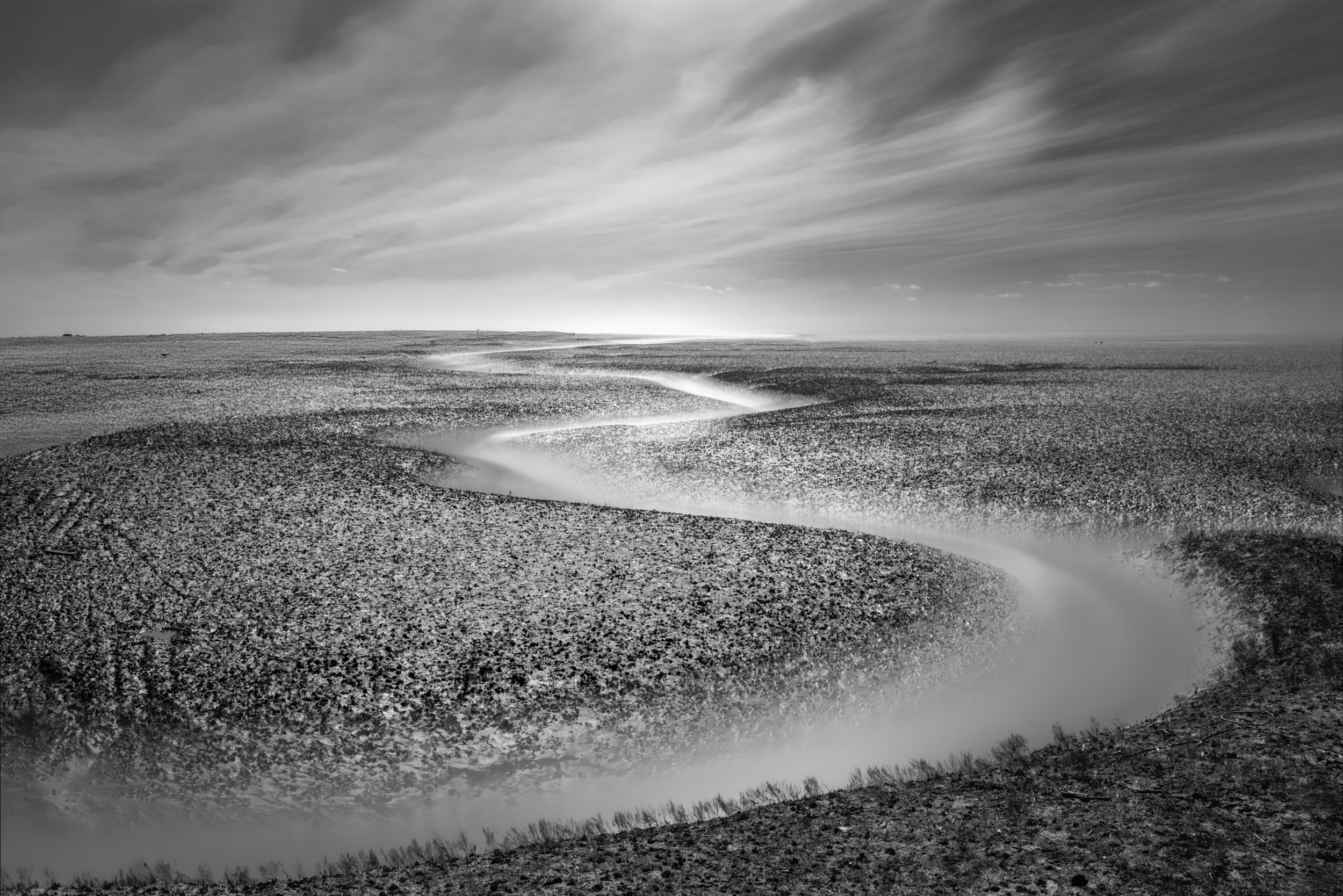
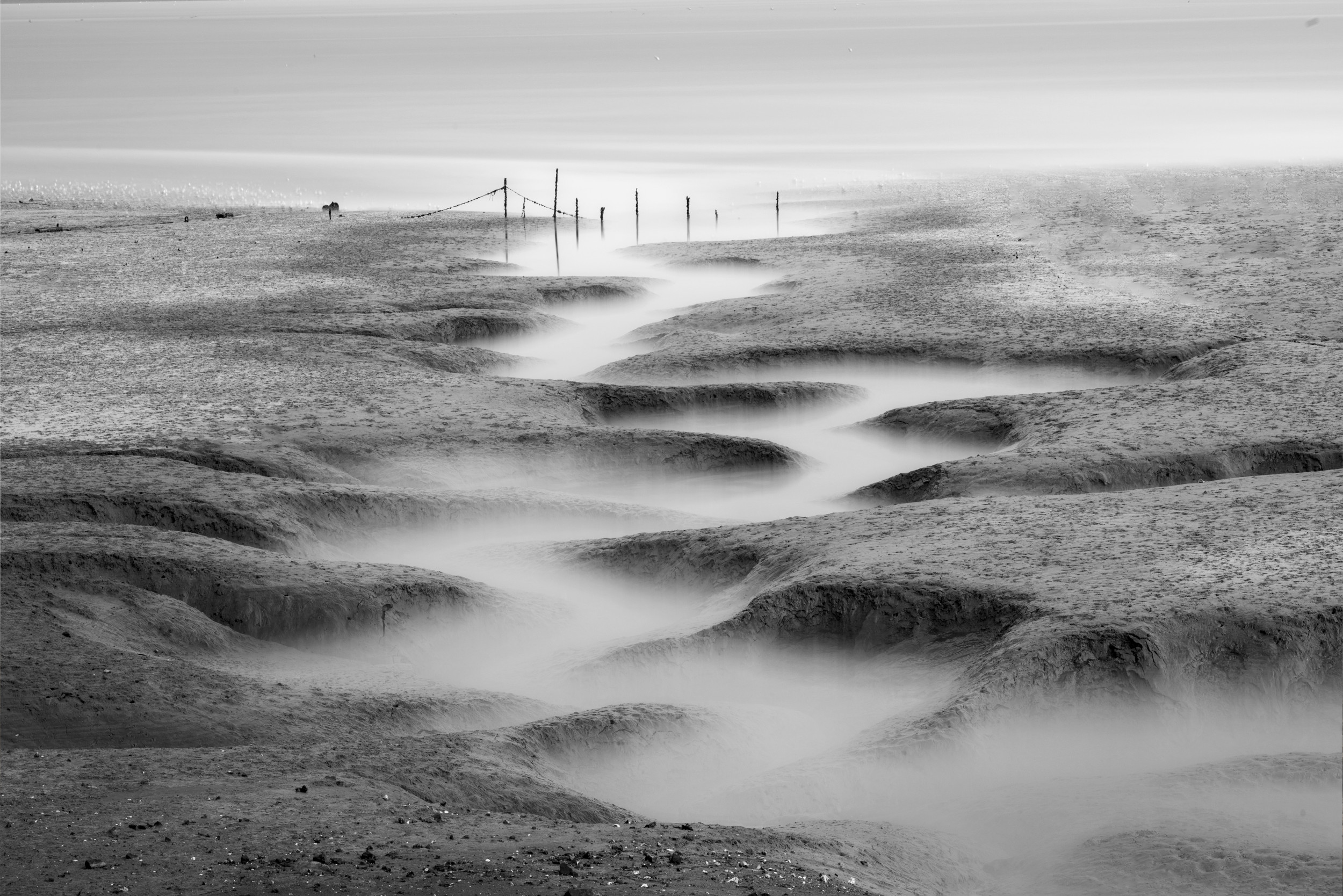
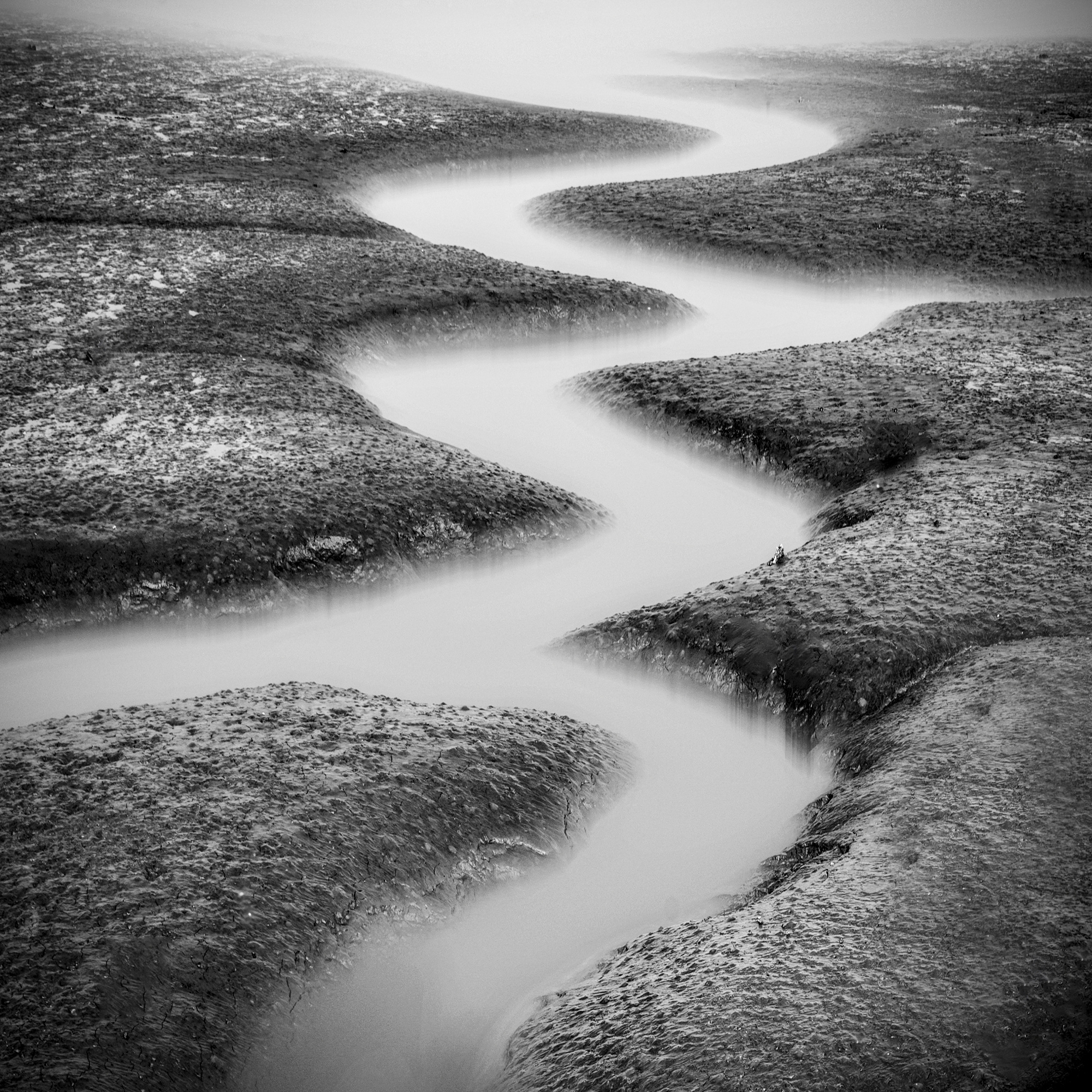
The long, serene hours spent waiting with the shutter open offer an opportunity to reflect on a busy life and find inner tranquillity. After a long wait, the image reveals a surreal world sculpted by the passage of time — a sight invisible to the naked eye. Converting the image to black and white intensifies the lines of the tidal channels and maximises the three-dimensional textures of the rugged rocks and mudflats. The stark contrast between the sharp, static subjects and the soft, mist-like trajectories of the water provides profound aesthetic inspiration that transcends reality.
Gaetbol(meaning 'tidal flats' in korean)
I look at the sea, the past years pass by
Clouds, waves, waterways, tidal valleys, nets, abandoned ships...
It disappears and is reborn with accumulated time.
When waterway seeps into the tidal valley
It leaves traces of the past as much as it accumulates.
When the waterway is stopped,
The stillness clears the mind.
If you pass the waterway one by one, you can see the arms of the tidal valleys again.
Nostalgia builds up where you stay.
Always carry the waterway with you in your arms.
Which is more important to you: the mood or story behind your images, or technical perfection?
Since the sea lies at the heart of my work, I like to compare the relationship between these two elements with that between a fisherman and a chef. Just as a fisherman can only achieve a bountiful catch when they thoroughly understand the habits of the fish and make flawless preparations, a photographer must read the flow of nature completely and possess technical precision in order to capture the ultimate raw image (the A-cut). Similarly, just as a chef takes fresh ingredients and creates an artistic dish with an ingenious recipe, a photographer must process the raw image through digital post-production, infusing it with their own philosophy and narrative to transform it into a creative work of art. Therefore, the atmosphere and narrative that an artist wishes to convey and the technical precision that supports it are equally important and can never be separated.
Do you carefully select the locations at which you intend to take photographs?
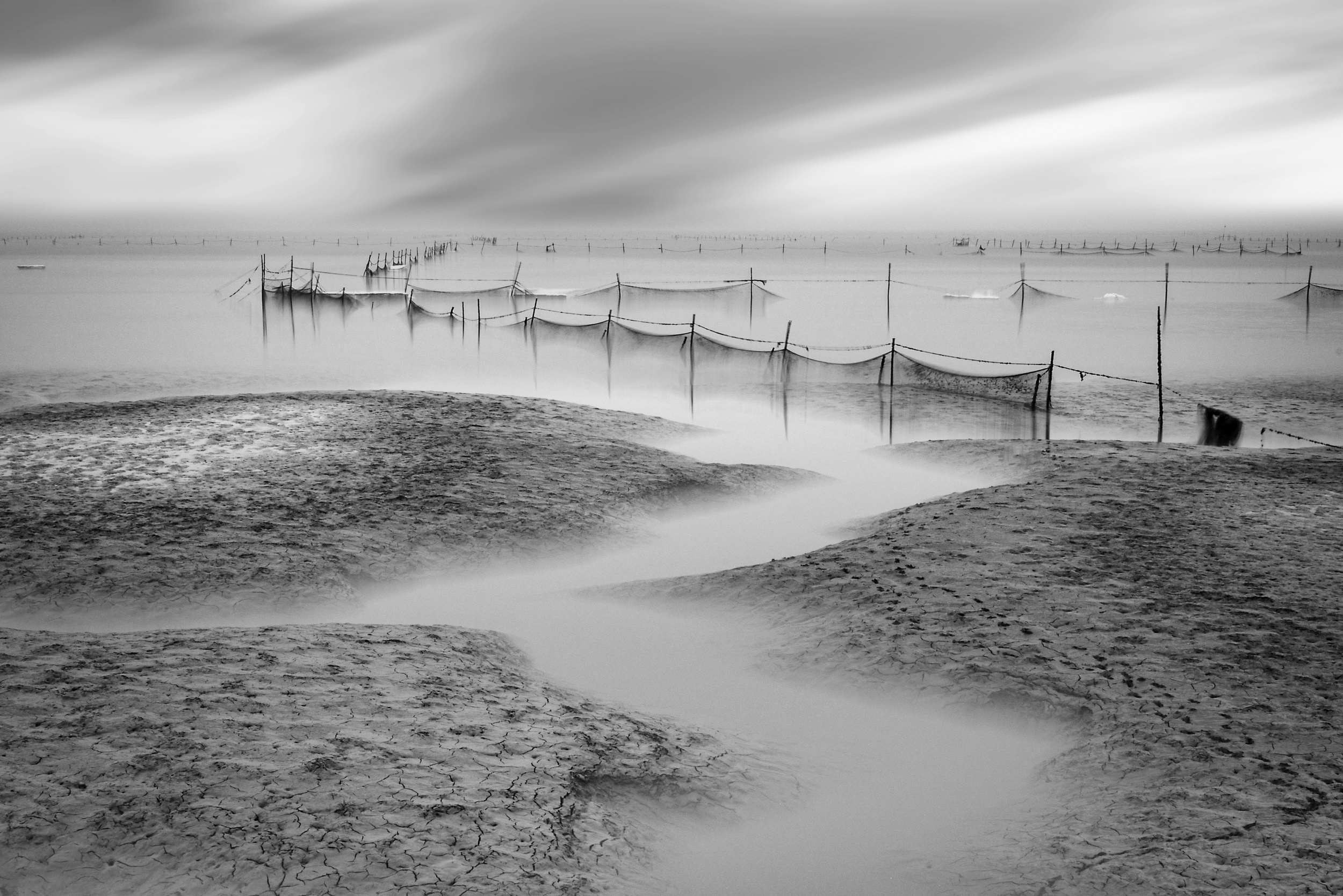
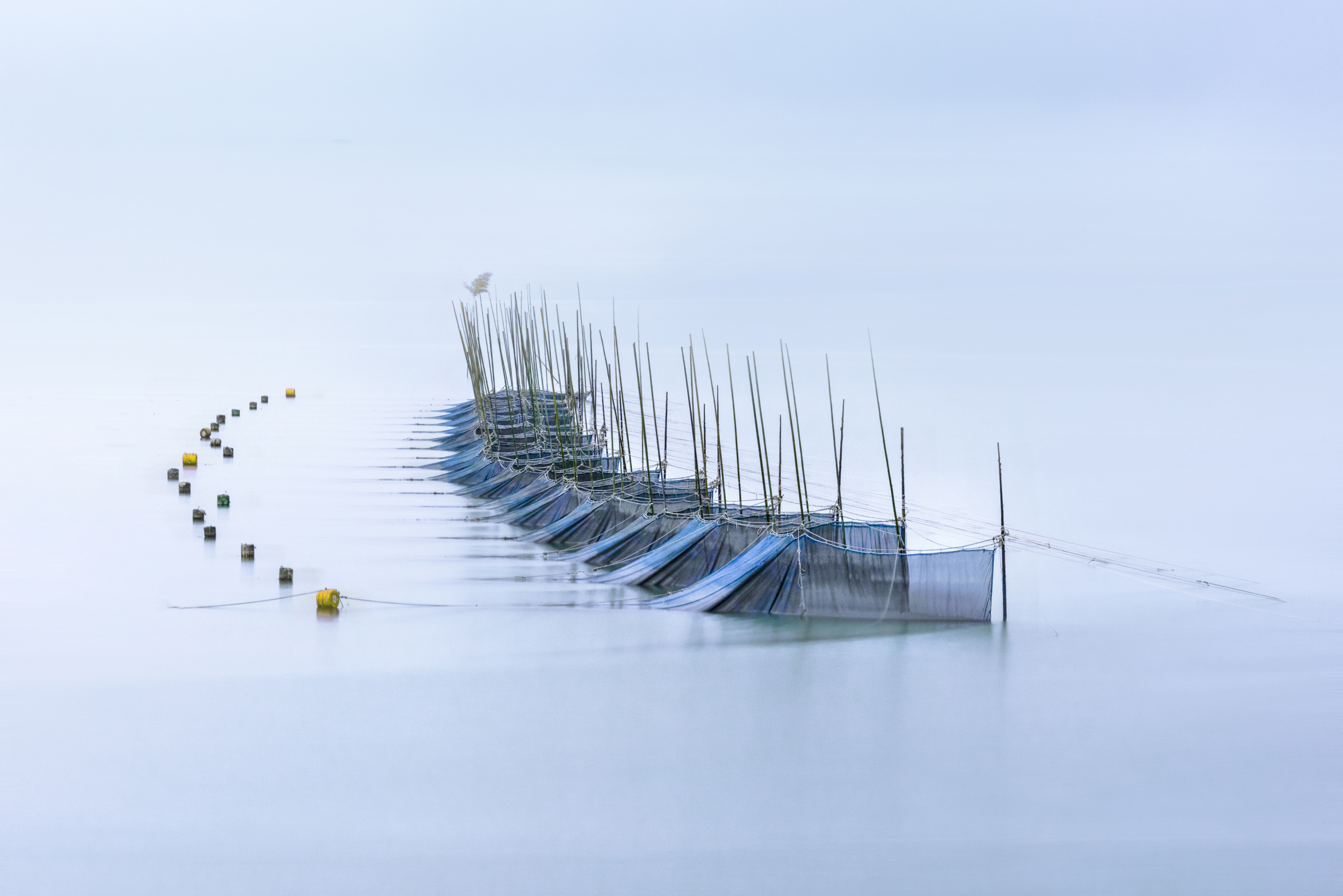
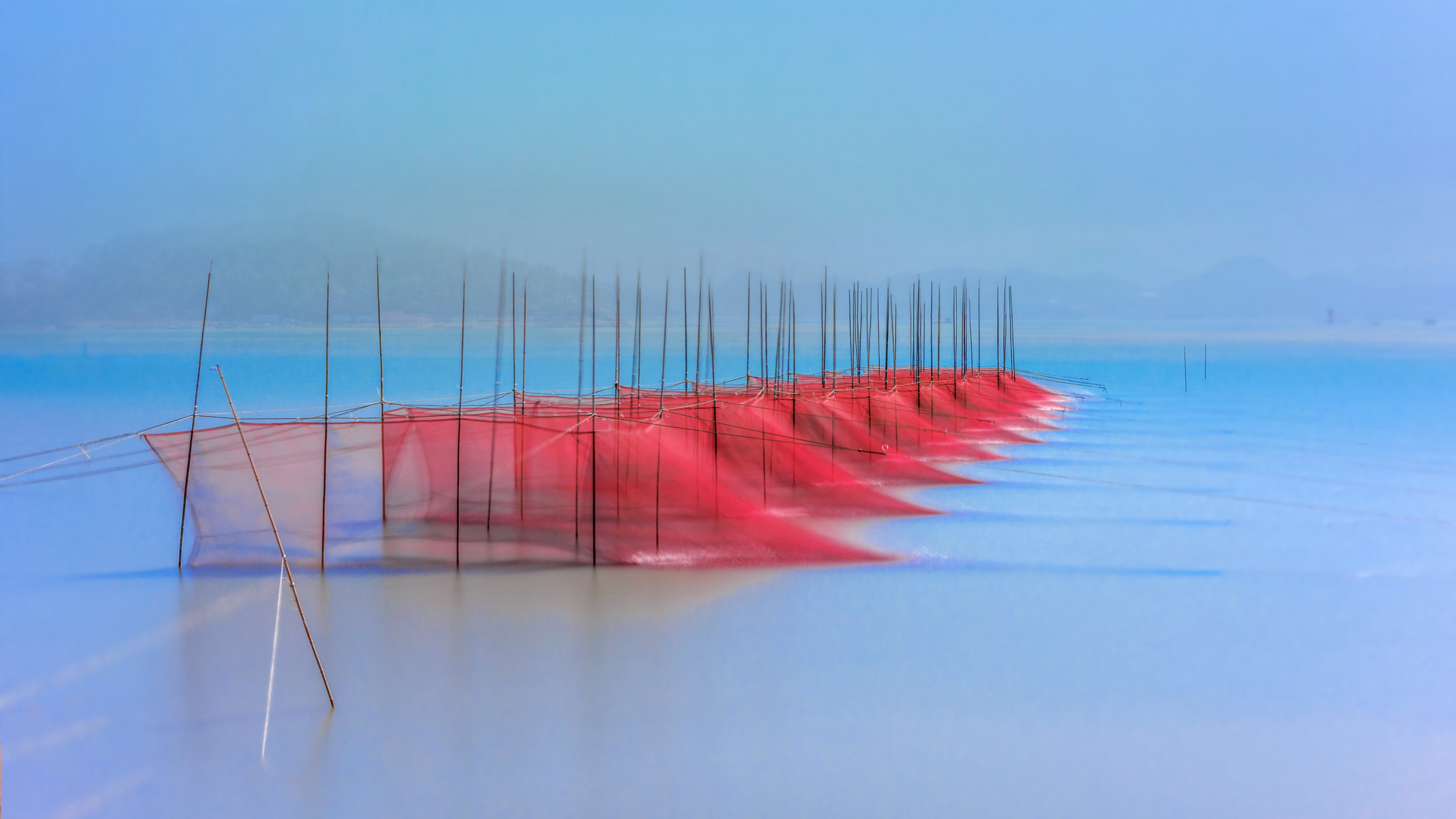
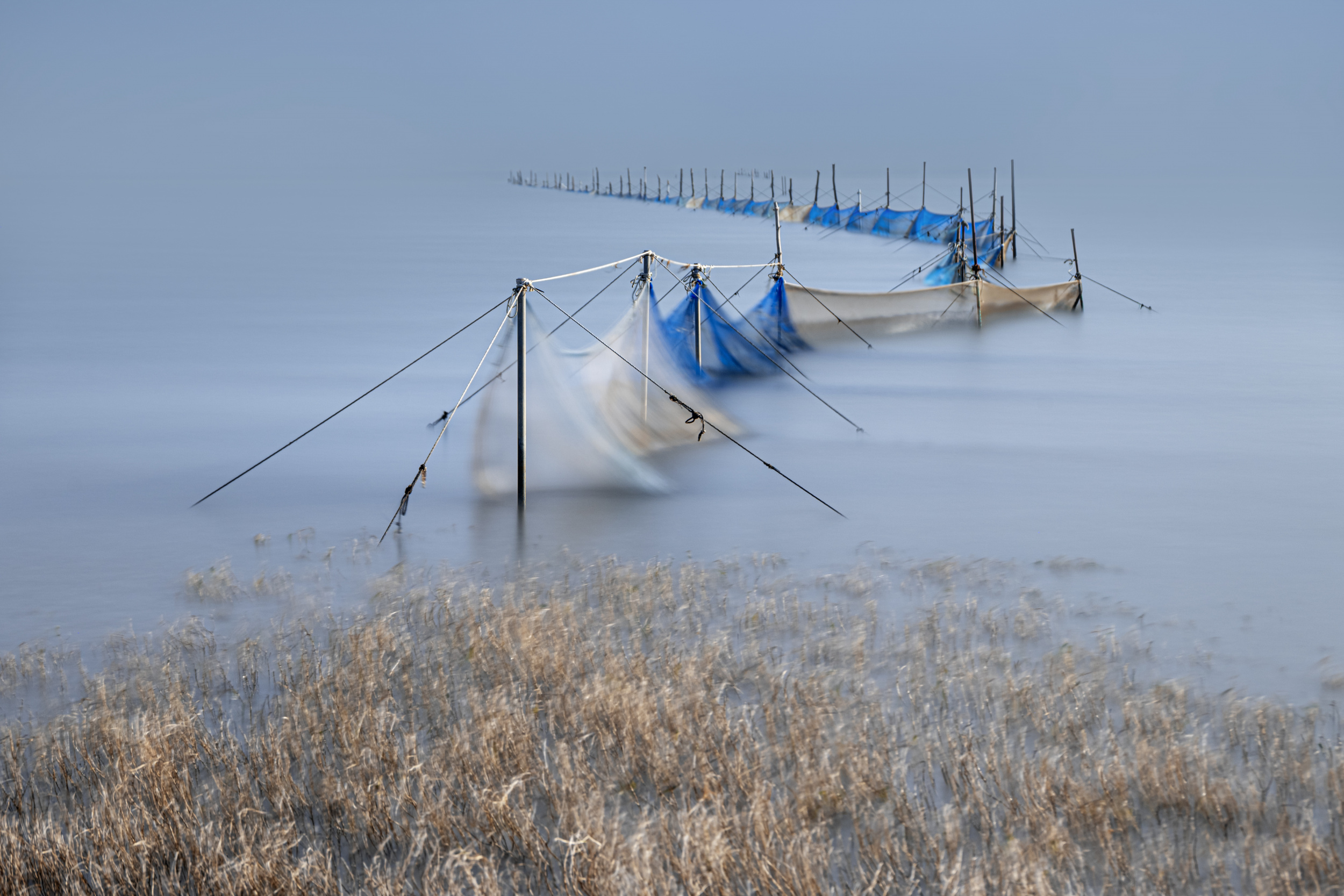
The first step and core of my work is selecting the location and conducting rigorous preliminary research. For example, in the case of the 'Net' series, the season in which the nets are installed, their location, shape and colour vary entirely depending on the species of fish, and the nets are usually dismantled after just one to two months. In order to capture these traces of life, I constantly monitor local tidal information and fishing conditions, rushing to the site the moment the nets are cast. Aquatic plants such as Suaeda japonica (sea seepweed), Fucus fulvescens and green laver are also seasonal gifts of nature, which is why I exercise the utmost caution when choosing the timing and location.
Net
The livelihood of coastal fishermen begins with the net.
As the tide enters, captured through a slow shutter,
the turbulent breath of the waves turns calm,
and the nets become essential lines.
Spreading wide across the sea like flapping wings,
they seize the passing traces of the fishermen's years,
recording them into a single, minimalist photograph within memory.
In your opinion, what are the most important qualities for a successful landscape photographer?
It is an attitude of humbly accepting only what nature permits each day and of constantly conversing with and harmonising with nature. Great work does not stem from human greed or intention, but rather from unwavering consistency and patience in submission to the laws of nature. In other words, I believe that 'humility' and 'patience', which connect the artist's inner self with nature, are the most vital qualities of a photographer.
Could you tell us more about your workflow, from the initial idea to the final product?
After precisely analysing the weather conditions and tides, I arrive at a location and establish either an overall composition or a restrained, minimalist composition tailored to the live site conditions. I then proceed with stack shooting using ND filters, usually at 2–4 minute intervals. When I need to perfectly capture topographical features, such as a 'Z-shaped tidal channel', I might spend an entire hour attempting a single long-exposure shot. If the clouds happen to be flowing beautifully at that time, I record a separate 2–4 minute exposure of the movement for the background. Later, during post-processing, I blend the captured shots using the stacking technique to create the most aesthetically pleasing gradations of light and shapes, infusing the work with my own artistic vision. Finally, I tidy up visual noise and unnecessary elements to complete a single piece of fine art that embodies artistic minimalism.
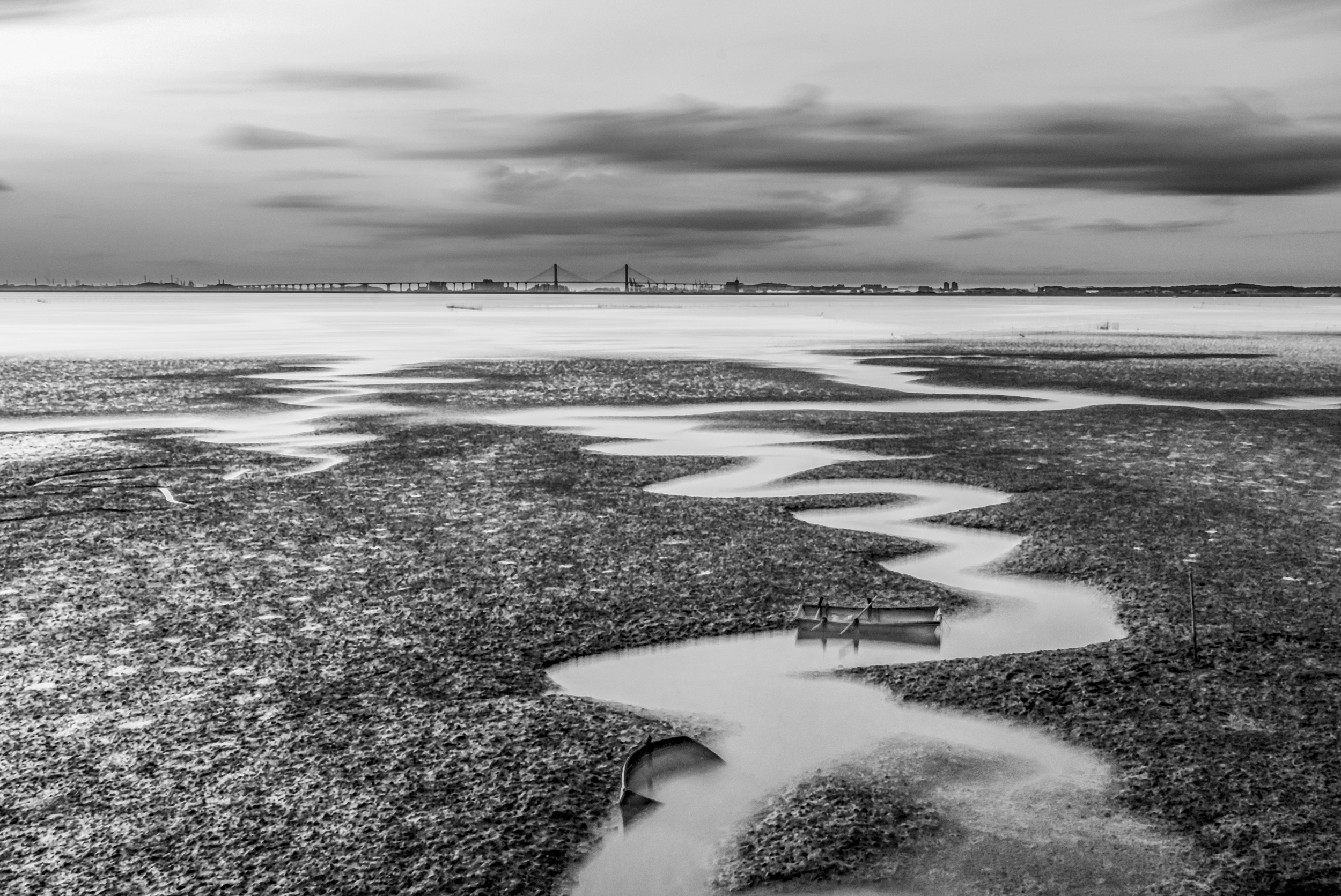
Stack shot
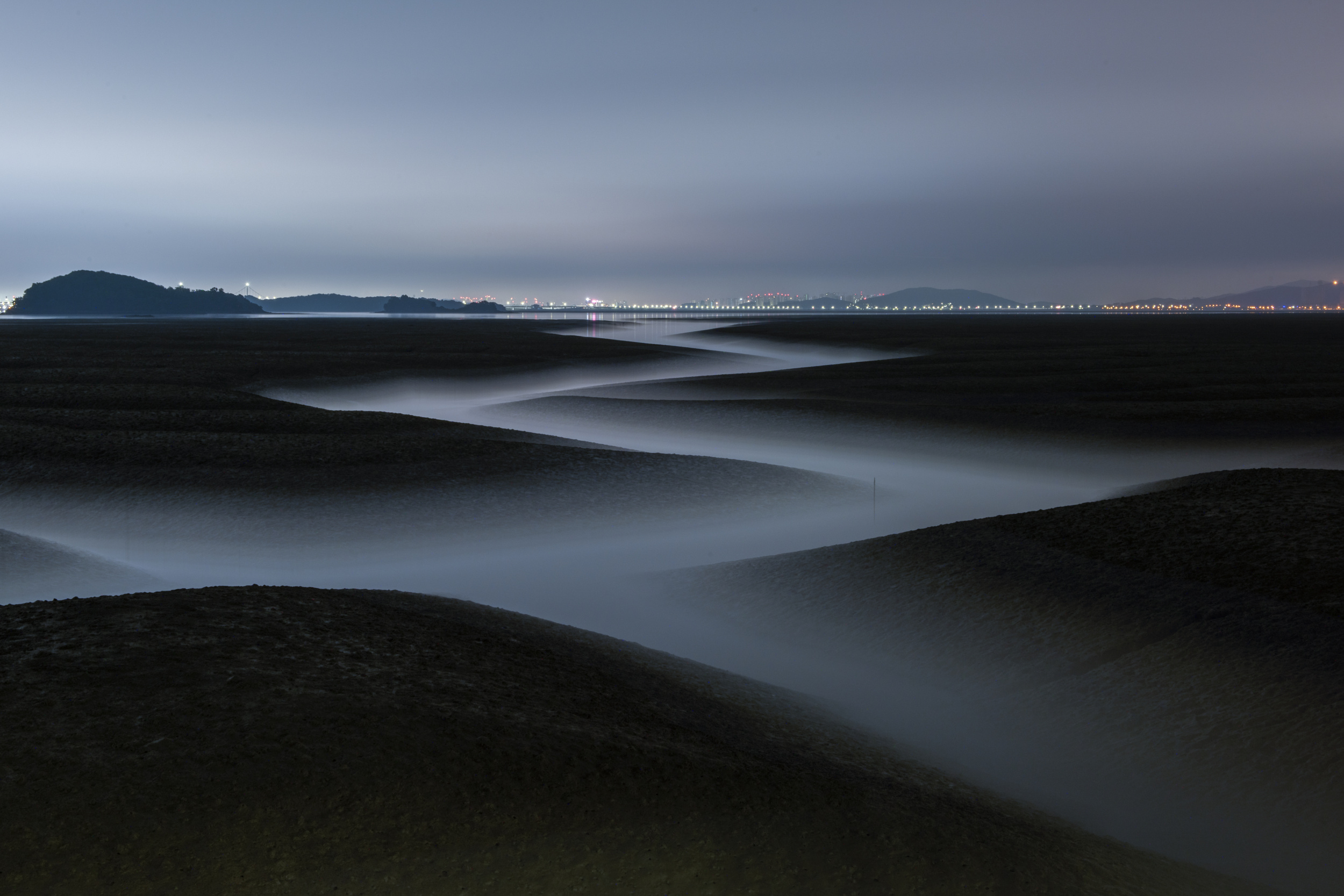
Long shot
Where do you look for inspiration, and what inspires you the most?
I am aesthetically stimulated by marine documentary photography and videos, as well as the portfolio exhibitions of world-class artists, which I view through various domestic and international online and offline media. However, the purest and most powerful inspiration comes from being on site, experiencing the power of nature first-hand as I walk along the nearby sea bed at low tide and sketch the landscape.
Many people believe that gear is unimportant if you're passionate about photography.
Could you please tell us what equipment you use, such as your camera, lenses, lighting and tripod?
I have always trusted the Nikon system for its rich gradations and exceptional low-noise sensor performance. My core gear currently consists of a Nikon DSLR and Z mirrorless camera body, standard and telephoto zoom lenses, a DJI drone, a heavy-duty tripod and a stone bag to withstand harsh sea winds, and a magnetic ND filter system. However, when it comes to long-exposure fine art photography, I believe that an artist's ability to capture the essence of their subject and their creativity in post-processing to refine the raw image are far more important than the specifications or grades of the equipment used.
Who are your favourite photographers or mentors, and how has their work influenced you?
The extremely restrained, minimalist, black-and-white, long-exposure techniques of the world-renowned photographer Michael Kenna awakened in me a sophisticated 'aesthetics of the void', revealing the essence through visual emptiness. Furthermore, the tonal reproduction of Sebastião Salgado, a master of documentary photography who uses weighty black-and-white gradations to express the grand narratives of Mother Nature and the Anthropocene landscape, has served as my ultimate mentor during my monochrome post-processing work.
As this interview is coming to an end, could you tell us about your photographic vision in general, and any projects you would like to be involved in?
My vision for photography is to capture the transient landscape and elevate it into an ideal, beautiful aesthetic by breathing in the 'passage of time' and the breath of nature. Furthermore, I believe that if we cherish every moment of our lives, they will eventually form a beautiful memory.
In the future, I would like to participate in exhibitions or projects that document the passage of time or minimalism. To this end, I am preparing collections categorised by various subjects found in the sea, such as mudflats, nets, rocks, abandoned ships, sea roads, structures and aquatic plants.
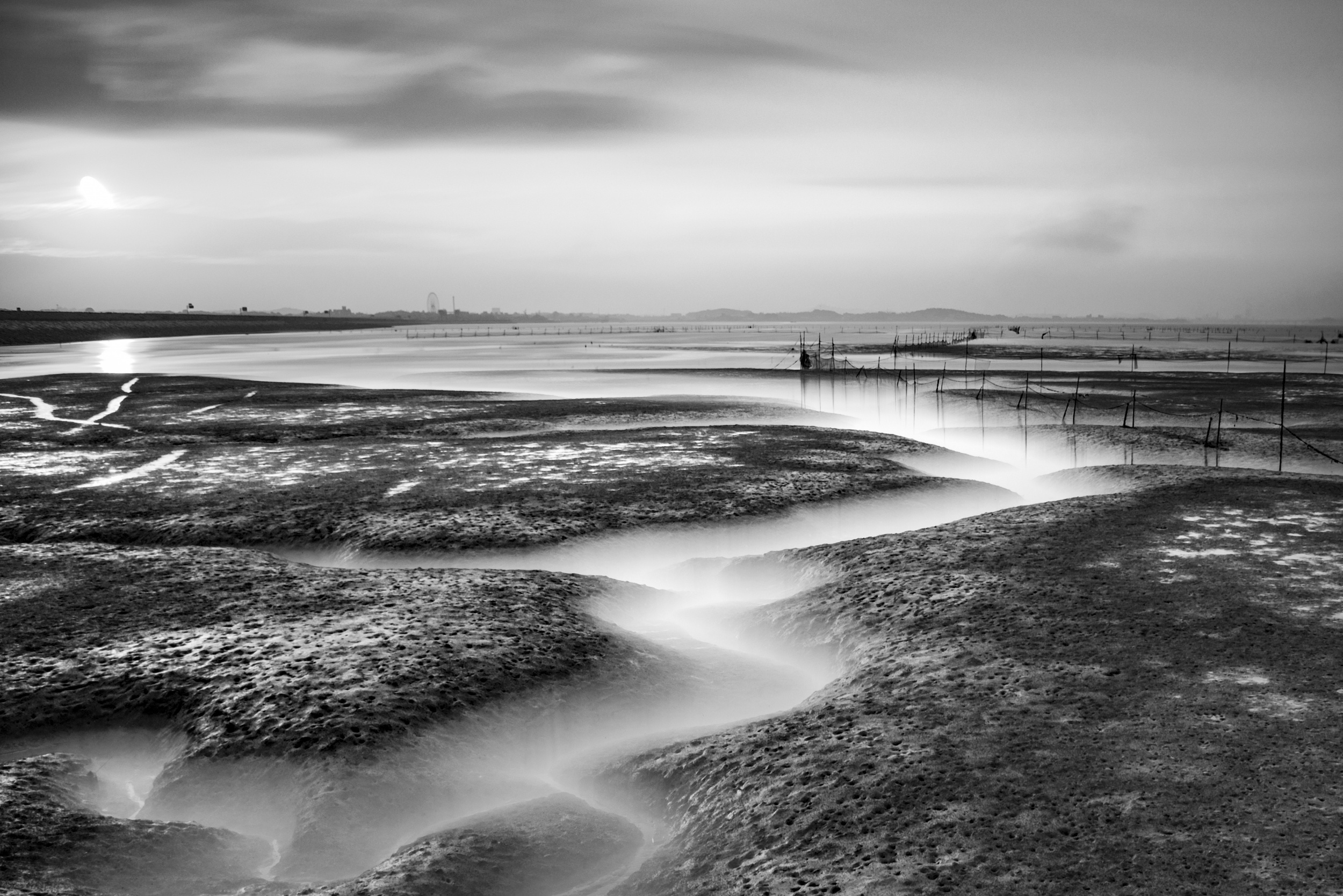
Gaetbol mudflats
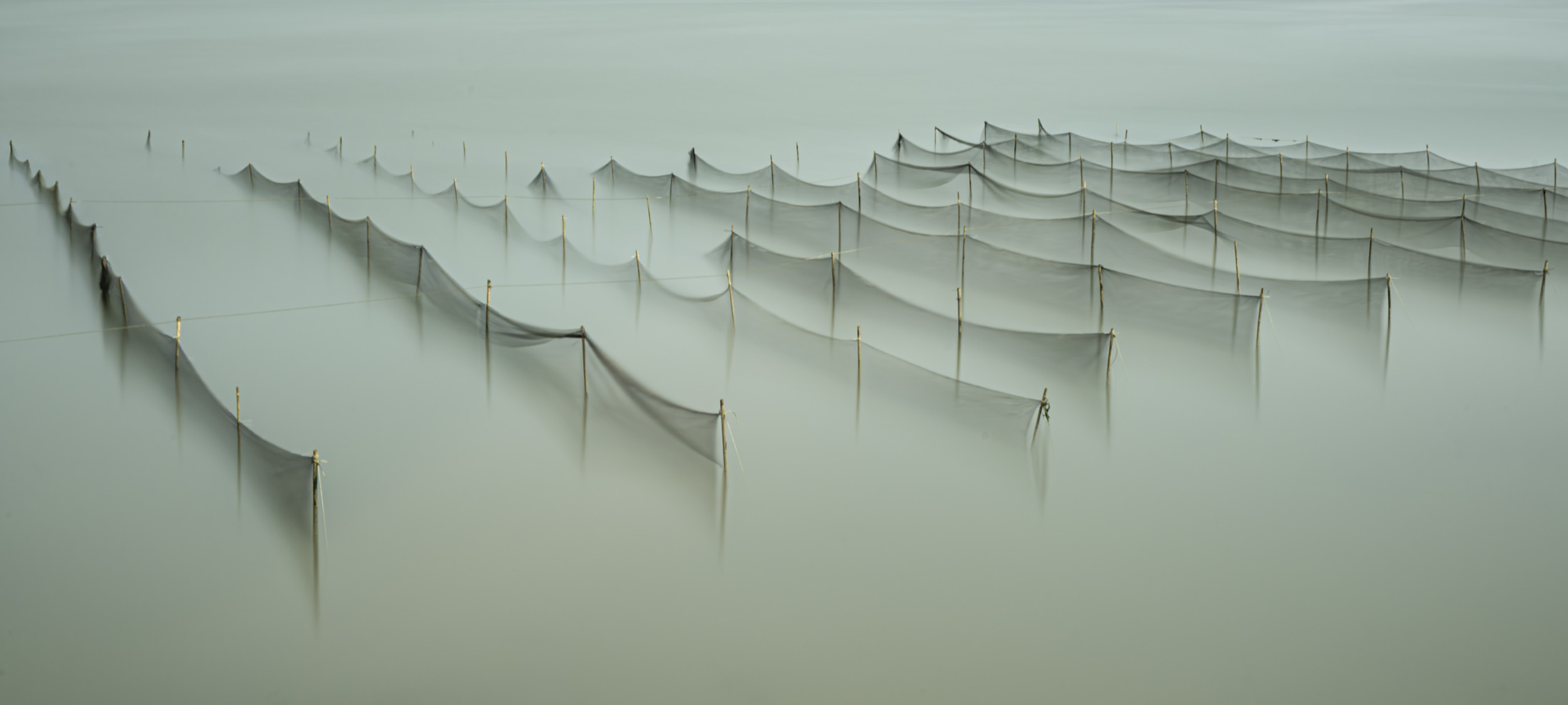
Net
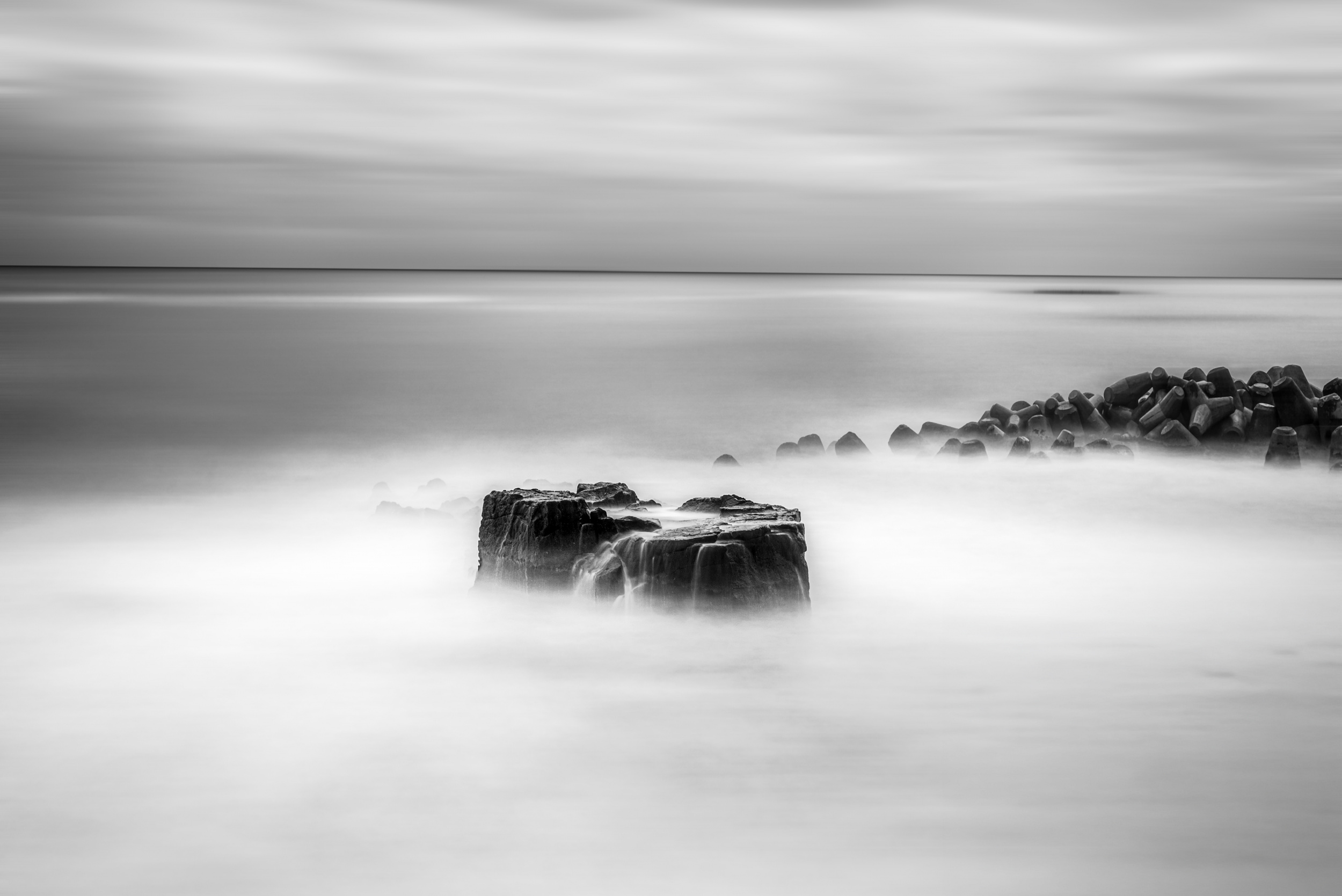
Rock
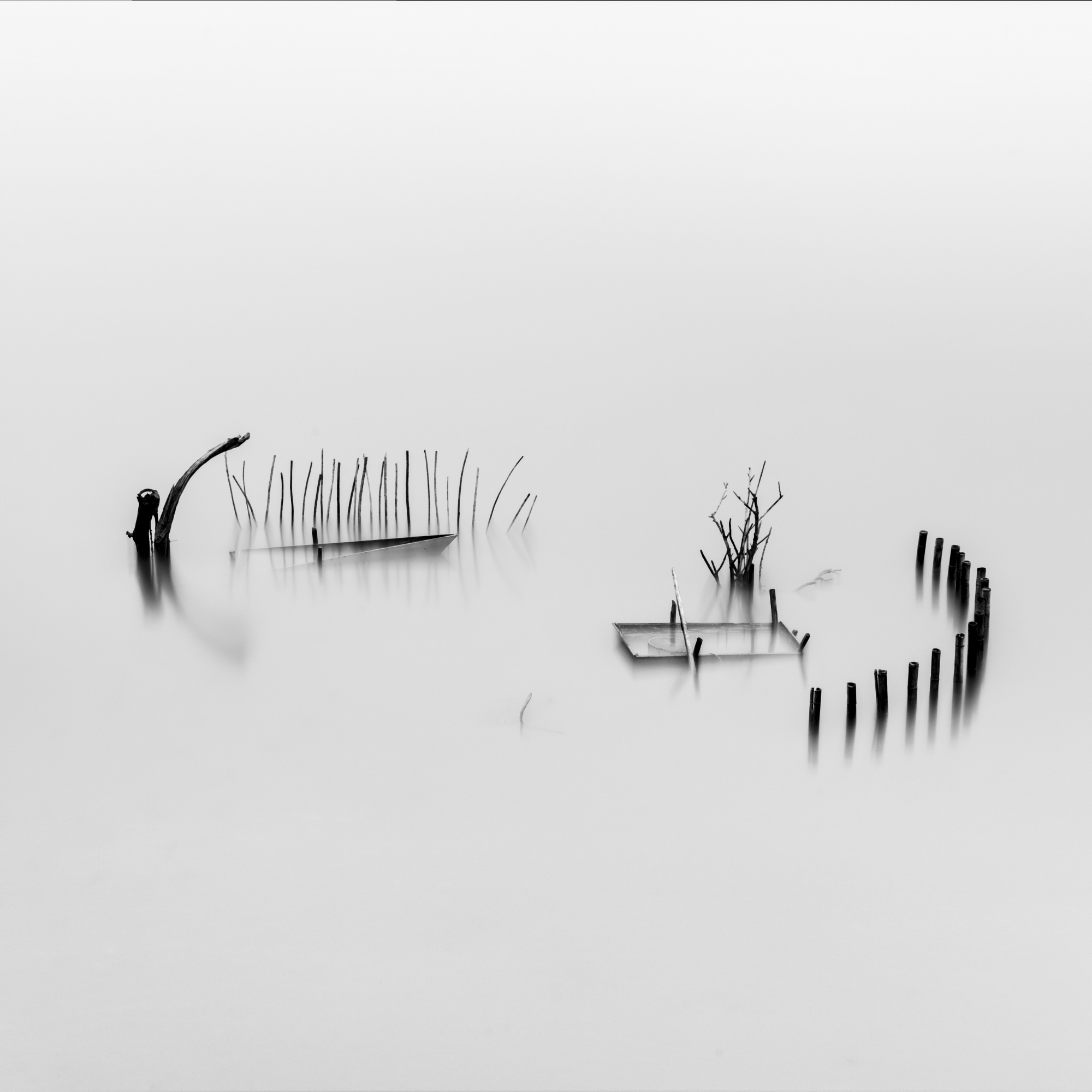
Abandoned ship
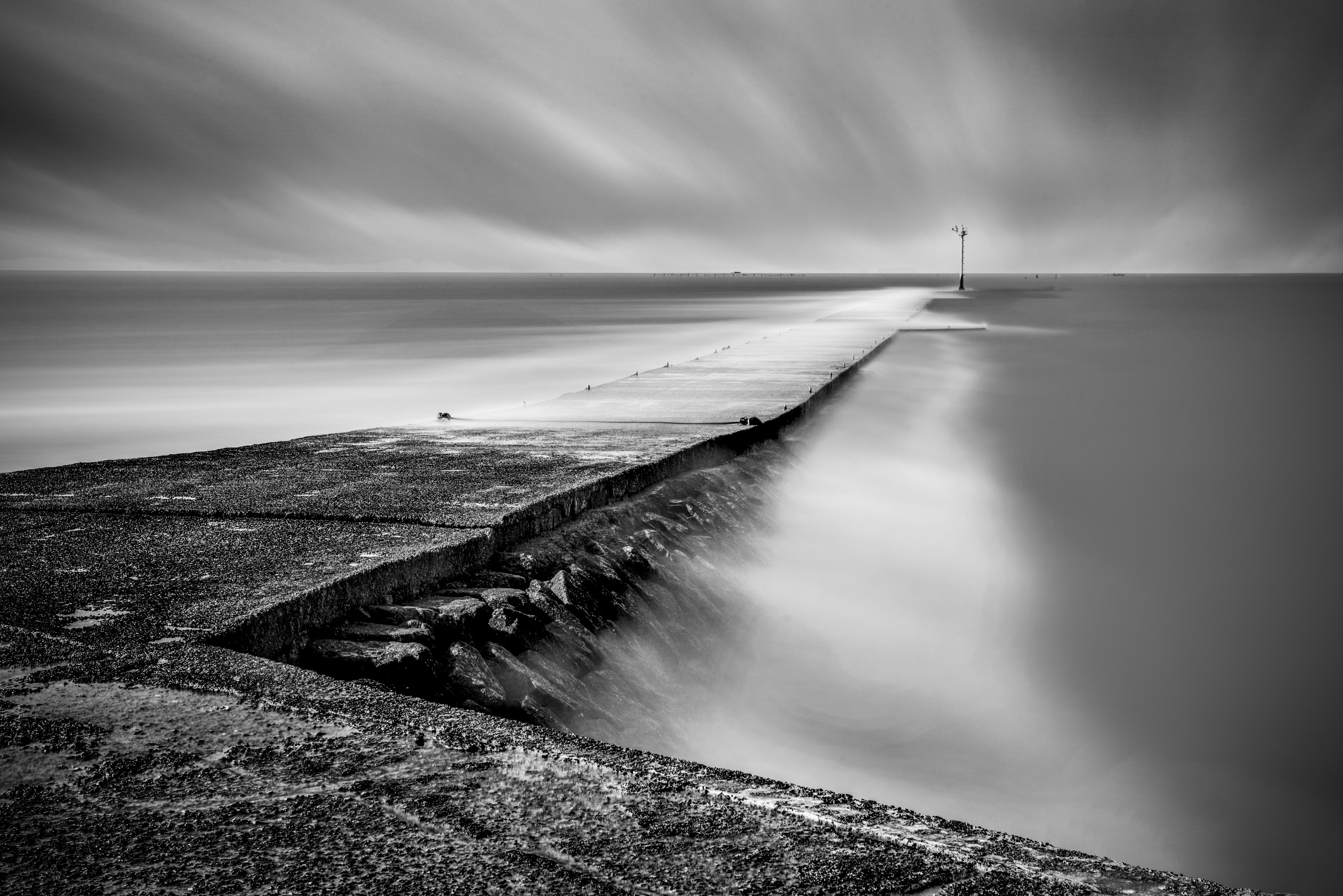
Sea road
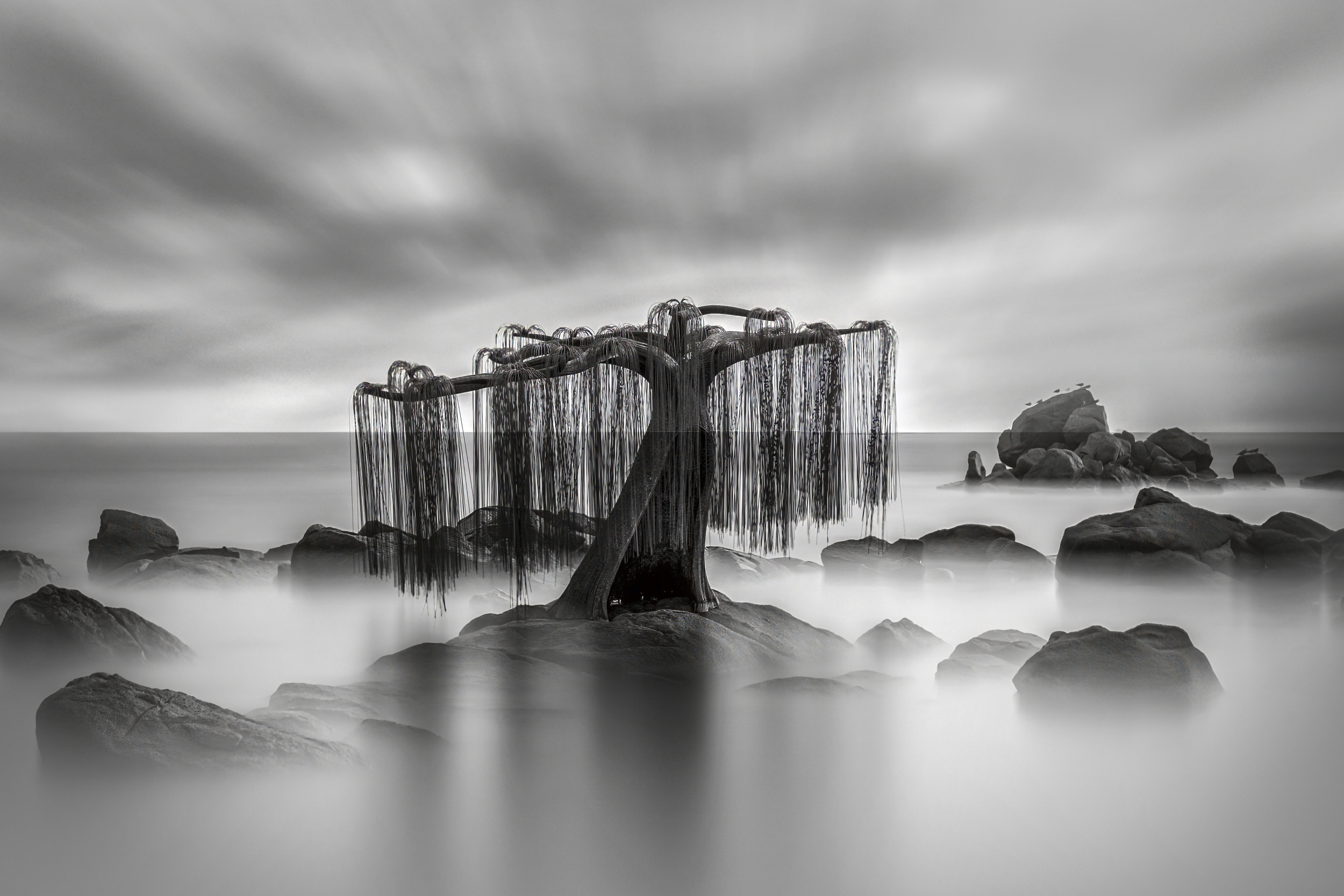
Structure
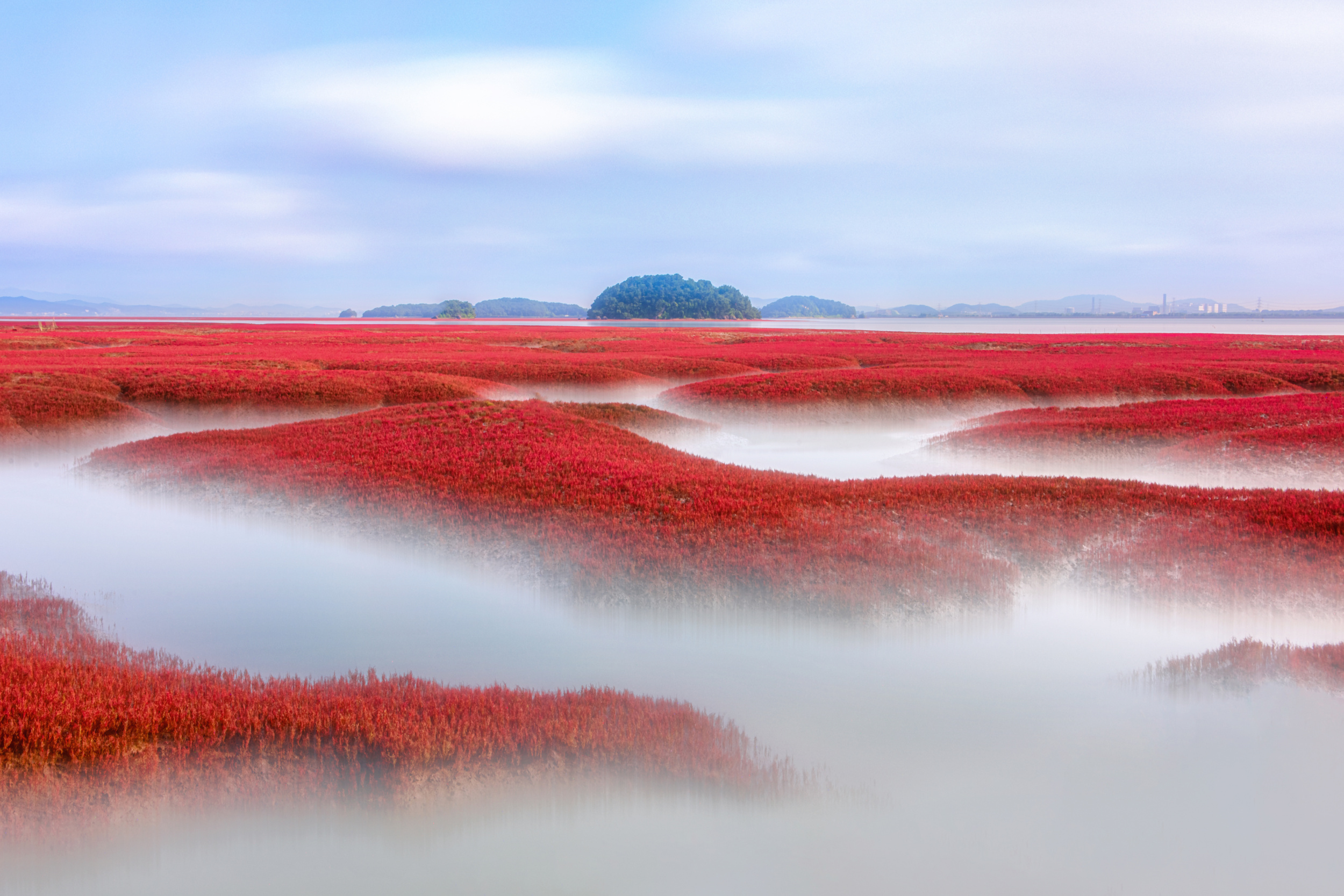
Aquatic plant(Suaeda Japonica)
Is there anything else you would like to add? What are your thoughts on using 1X to showcase your work?
Although I have only recently joined 1x, I am sincerely grateful and deeply honoured to have been granted the monumental opportunity of a magazine interview. Encountering the 1x Magazine and the breathtaking works of world-class artists has broadened my artistic vision and horizons immensely. 1x boasts an exceptionally rich diversity across its magazine features and genres, offering endless inspiration.
The unique, rigorous and objective curation system is particularly invaluable, serving as a sophisticated guide that teaches artists how to strike a delicate balance between subjective self-satisfaction and the universal aesthetic preferences of the public. This system is a powerful lighthouse for me, constantly inspiring me to refine my existing works and relentlessly perfect my fine art.
If I may make one small suggestion, I hope that dedicated independent categories for 'Long Exposure' and 'Minimalism' will be established on the world’s most prestigious art photography platform, 1x. This would enable artists specialising in these genres to share their profound aesthetic vision with readers around the world.
Thank you so much for this most interesting interview, dear Yein.
I'll submit your small suggestion to the 1x management ;-)
Portfolio :
https://yeintree.myportfolio.com/
Yein's net series by IPA Fine Art Minimalism reached number one.
https://www.photoawards.com/social/zoom.php?eid=8-1722620880-26
His mudflat photographs (published on 1x) were mentioned with honour.
https://minimalistphotographyawards.com/2026/08/25/tidal_flat-gun-mok-lee/
https://monovisionsawards.com/winners-gallery/monovisions-awards-2026/show/12665
 | Write |
 | Angelika Vogel PRO Quiet, intense glimpses into the natural world-amazing compositions, sometimes pared down to the bare essentials. These are impressive photos that one never tires of looking at! Congratulations to Jain on these beautiful images, and a big thank you to Yvette for this excellent portfolio! |
 | DonnaHom APA PRO Beautiful landscape collection. Congratulations to Yein. Thank you editors for the superb interview. |
 | Svetlana Povarova Ree PRO I have long followed your work, dear Yein, and am delighted to have the opportunity to get to know it in greater detail now. I greatly appreciate your distinctive style and high level of professionalism. Gorgeous art images! Congratulations! Thank you very much to Yvette! |